Sustainability
Our production sites, our materials and our processes are covered by our commitment to sustainability. We don’t call ourselves “green”, but we do work as sustainably as we can.
We focus our attention on worthwhile initiatives with verifiable outcomes. Our own production sites have been awarded the ISO 14001 environmental management certificate.
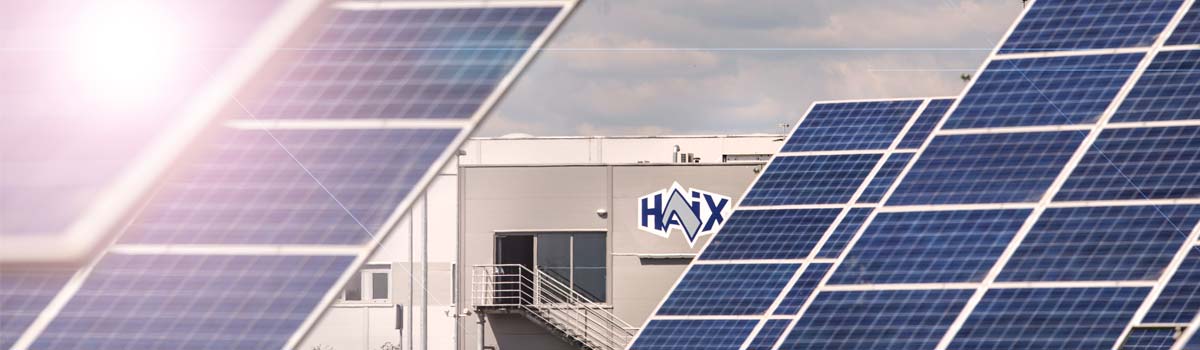
- The optimal use of materials and energy is ensured by: a solar plant in Mainburg, heat recovery by ground water pumps, process water being heated up by waste heat from compressors in Croatia
- The cutting-edge production sites in Mainburg and Croatia go above and beyond fulfilling the statutory requirements (e.g. our finishing divisions in Mainburg und Croatia work on a 99% solvent-free basis)
- We work with selected suppliers that apply the toughest production standards within their businesses, such as Josef Heinen GmbH & Co. KG (“terracare”) and Viviani (“Natural Footprint”)
We prioritise high quality when it comes to the materials we use and how we process and handle the products, which means that we are able to offer products with an extended service life Resources are deployed more efficiently and so we can make a greater contribution to protecting the environment (e.g. by using cutting-edge machinery, efficient transport routes, continuous process optimisation)
We take a realistic approach to pursuing our policy of demonstrating proactivity and personal responsibility over and above what is required by legislation – from a social, environmental and economic perspective.
Our scopes
Calculate, reduce, offset – CO2 emissions play a decisive role in climate protection in line with the Paris Agreement. The first step in reducing our company’s corporate carbon footprint (CCF) is to find out where emissions are generated in the first place. We therefore regularly have our CCF analysed and draw conclusions about the areas in which we can improve.
In 2025, we had our Scopes 1, 2 and 3 from the previous year determined in detail by an external specialist, including a 15 per cent safety margin. We came up with a total of 59.921 tonnes of CO2e. The breakdown is as follows:
Scope 1: Our direct emissions include fuels, vehicle fleet and refrigerants, resulting in 680 tonnes of CO2e, which accounts for 1.13 percent of our total emissions.
Scope 2: This category includes the environmental impact of electricity and district heating, which accounts for 1.499 tonnes of CO2e, or 2.5 percent.
Scope 3: At 96 per cent, emissions in this area account for the largest share. 57.742 tonnes of CO2e are generated by upstream and downstream operating areas. Our calculations take into account purchased goods and services, processing and use of sold products, end-of-life treatment of sold products, upstream and downstream leased assets, capital goods, fuel- and energy-related activities not included in Scope 1 or 2, upstream and downstream transportation and distribution, waste generated in operations, business travel, commuting and work from home.
We plan to achieve an absolute reduction in Scope 1 and 2 of 42 percent by 203o compared to 2023. In the base year, we emitted 731 tonnes of CO2e in Scope 1 and 1.760 tonnes CO2e in Scope 2. Our target is in line with 1.5°C pathway. We aim to achieve this through measures such as switching to renewable energy and increasing energy efficiency.
We are aiming for an absolute reduction in Scope 3 emissions of 25 percent by 2030 compared to 2023 (52.902 tonnes of CO2e). In 2024, we are seeing an increase in this area as additional emissions were taken into account due to the opening of a new production facility in North Macedonia.